Marvel Rivals Nightcrawler: Release Date, Healing and Teleports
Nightcrawler brings healing and ally teleportation to the Strategist role. Here’s what’s confirmed for Season 11—and what needs testing after launch.
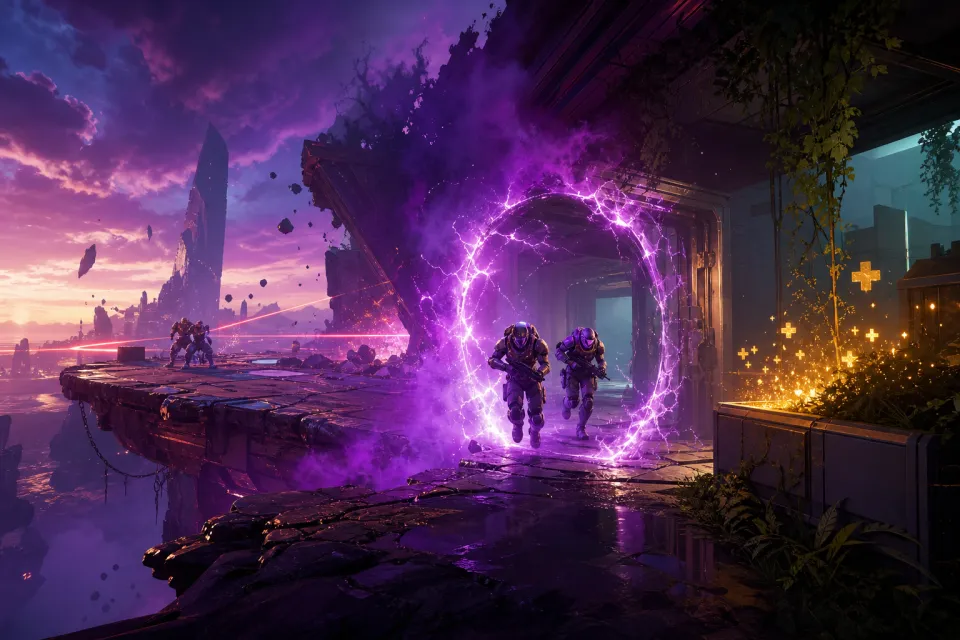
Nightcrawler is coming with Marvel Rivals Season 11: Doomsday, which launches November 13, 2026. He is a Strategist—a support-focused character—with healing bombs and teleportation that can reposition teammates, according to the publisher’s Season 11 announcement.
This guide reflects information available on November 11, 2026. Treat the practical suggestions below as launch-day experiments, not a tested competitive build. Knowing what a power does is different from knowing its safest timing.
Nightcrawler’s release date: what to put on your calendar
The announcement places Nightcrawler in the first half of Season 11. It does not provide an exact server-opening hour, so avoid treating estimated Pacific or Eastern times as guaranteed.
For US players, the useful plan is simple: check the game’s notices before arranging a session on Friday, November 13. A release date does not promise that you can log in at midnight in your time zone.
Use the official Marvel Rivals news page for update notices rather than relying on a countdown shared without a source. If a launch notice gives a time in UTC, the global reference time, convert that specific time to your local zone.
What being a Strategist means for beginners
Think of support as a decision-making job: help a teammate survive, help the group move together, and choose when attacking is worth the risk. Your first question should be “Who needs help?” rather than “Who can I chase?”
Nightcrawler’s confirmed combat description includes close-range fencing and blinking into and out of fights. That suggests an active support style, but it does not establish how aggressively beginners should play him.
Suggested starting approach: stay where you can watch teammates, identify a safe retreat, and attack only when doing so will not distract you from an urgent rescue. Treat the sword as another tool, not permission to abandon the group.
Do not choose a permanent support partner from an old ranking alone. The official November 13 balance post outlines changes to almost all existing Strategists, including adjustments to survivability and combat capabilities. Recommendations should account for those changes, not just Nightcrawler’s arrival.
How Nightcrawler’s healing works
Confirmed: Nightcrawler throws brimstone bombs that heal teammates and damage enemies, as described in the publisher’s ability overview.
That establishes their purpose, not their complete rules. Before building a healing routine, check the launch ability descriptions and test these questions:
- Targeting: must the bomb hit an ally directly, or can a nearby explosion heal them?
- Coverage: can one throw restore health to several teammates?
- Timing: does healing happen immediately, over time, or through another effect?
- Resources: what limits repeated throws, and how quickly can you use them again?
- Self-healing: can Nightcrawler benefit from his own bombs?
These are testing questions, not claims that any particular mechanic exists. Do not assume that “bomb” guarantees a large healing area or that damaging an enemy automatically heals a nearby ally.
Suggested first drill: practice helping one injured teammate before attempting throws into crowded fights. Watch the health bar, repeat from different distances, and separate reliable results from lucky throws.
Once that feels comfortable, try healing while moving between cover positions. The goal is a repeatable support action you can perform under pressure, not an impressive-looking throw that leaves you exposed.
Teammate teleportation: arriving is not the same as rescuing
The announcement confirms two distinct functions: Nightcrawler can teleport to an ally and carry a teammate through the Brimstone Dimension, either away from danger or toward combat.
Keep those jobs separate in your thinking. Reaching a teammate answers “How do I get there?” A rescue also needs an answer to “Where do we go next?”
A defensive experiment
With a willing friend, practice identifying a retreat position before attempting a pickup. Choose somewhere with cover and room to regroup, rather than simply moving a short distance from the original threat.
Start without enemy pressure. Then try the same sequence during a low-stakes fight. Record whether the destination was genuinely safer and whether the teammate could immediately understand where they had arrived.
An offensive experiment
A “dive” means committing quickly onto an enemy position. Before testing an offensive transport, agree on the target, the arrival point, and what you will do if the attack fails.
Do not assume teleportation grants invulnerability, removes harmful effects, passes through every wall, or lets passengers attack during travel. Those are separate mechanics that need verification. Also check how teammate selection works and whether the passenger has any confirmation or cancellation controls.
Good etiquette matters regardless of those controls. Ask before experimenting with someone’s position, and do not use teammate movement to prank strangers or interrupt a play you have not understood.
His ultimate: confirmed sequence, untested combinations
According to the ultimate description, Nightcrawler teleports allies individually to a target location, then pulls enemies within the affected area to himself.
An ultimate is a character’s major special ability. For this one, the beginner-friendly lesson is to evaluate the destination before thinking about a spectacular follow-up attack.
Suggested testing order: first learn the targeting controls and sequence. Next, investigate which allies are eligible, how far the effect reaches, and what can interrupt it. Only then experiment with coordinating teammates’ attacks.
A combination with an attack that hits several enemies is a reasonable hypothesis, not a proven recommendation. You still need to establish whether the timing lines up, whether enemies can escape, and whether teammates arrive ready to act.
Practice a clear callout such as “Gathering here—ready?” Avoid promising that the ultimate guarantees a capture, a rescue, or a team elimination. Judge an attempt by whether the resulting position helped your team, not merely by how many characters moved.
Your first-session checklist
Keep the opening session focused. This learning order prioritizes understanding over guessing at an ideal build:
- Read the live ability descriptions. Note ranges, resource limits, cooldowns—the waiting periods between uses—and any targeting instructions.
- Establish dependable healing. Learn what a successful bomb throw looks like before adding sword attacks.
- Check teleport restrictions. Test distance, obstacles, passenger selection, and destination placement with a willing partner.
- Rehearse one rescue. Make a simple retreat repeatable before attempting complicated offensive transport.
- Learn the ultimate separately. Understand its sequence before asking teammates to commit their strongest abilities.
- Review one decision afterward. Ask whether you improved a teammate’s situation or merely changed their location.
For younger players, make the first session a cooperative learning exercise. Encourage short, respectful callouts, avoid sharing personal information, and agree that an unwanted teleport or failed rescue is a reason to discuss the play—not insult another player. The developer’s speech moderation policy addresses abusive communication.
The best starting goal is modest: become someone teammates can trust. Learn your healing, make deliberate movement decisions, and label experimental tactics honestly until you have repeatable results.
Sources: gamespress.com, marvelrivals.com
 Read next:Ocarina of Time on Switch 2: Your Spoiler-Light First Guide
More stories

Roblox PINKIE PROMISE: Chapter 1 Badges, Secrets and Safety
Start Chapter 1 without spoiling the ending, check which badge goals are documented, and use an optional secrets checklist plus practical parent tips.
Roblox Catch a Plane: Grip Upgrades and New Worlds Guide
Learn the official strength, glove, gear-box and trophy loop, with a practical first-session plan and parent tips for purchases and account safety.
Overwatch’s ‘In the Wolf’s Mouth’: Doomfist’s Return Explained
Spoilers ahead: Doomfist defeats Vendetta, but Talon’s story is not finished. Here’s what the short establishes—and what it does not confirm about fu…